

Here are some frequently asked questions about UK sheet metal fabrication
Have a question of your own?
Please get in touch
+44 (0)2476 393889
sales@unifabs.eu
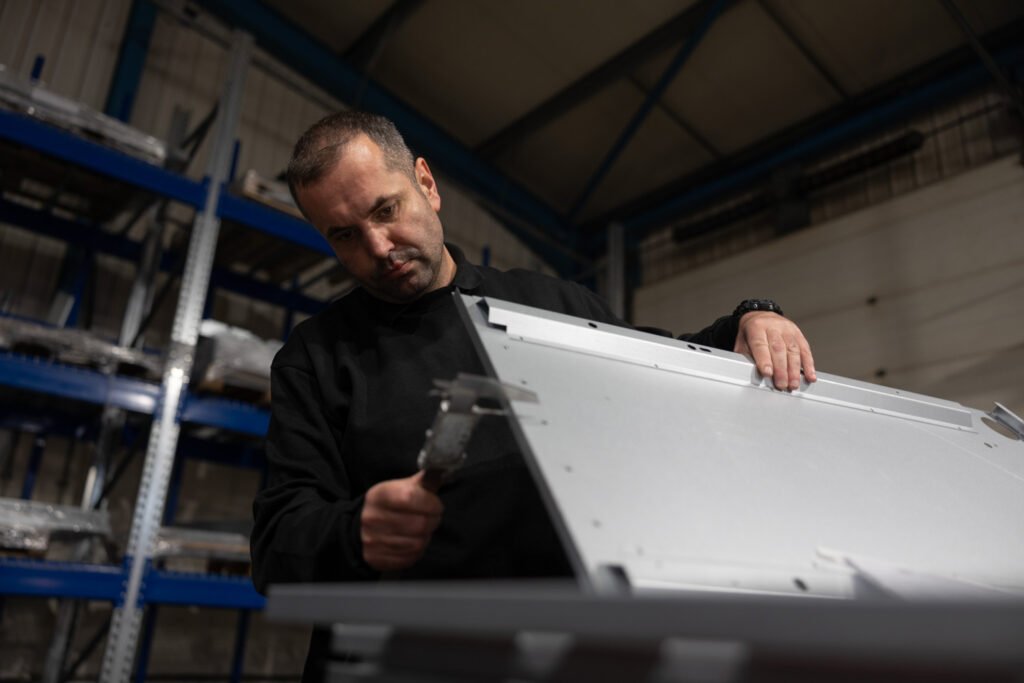
In simple terms, metal fabrication is the process of creating metal parts and components by cutting, forming, joining and finishing raw metal materials.
Metal fabrication plays a crucial role in producing a wide range of products, from small components to large structures. It involves using a variety of techniques to shape raw metal into components, sub-assemblies or structural elements.
Many people confuse “fabrication” with welding, but welding is just one of the many processes used by fabricators. Most metal fabrication involves sheet metal, which is converted into finished components through punching, cutting, folding and welding, ready to be used in the assembly of complete products.
If you’re unsure how fabrication fits within the wider manufacturing process, our guide on fabrication vs manufacturing explains the difference in more detail.
Sheet metal is metal which has been formed into flat pieces, typically via an industrial process. It can vary from thick sheets or ‘plate’, right down to thin sheets known as foil or leaf.
Many metals can be formed into sheets, including steel, aluminium, copper, brass, tin, nickel, and titanium. Precious metals such as silver, gold and platinum can also be produced in sheet form.
At Unifabs, we transform these sheets into parts and sub-assemblies using fabrication processes such as profiling, bending and welding, ready to be integrated into complete products.
Sheet metal fabrication involves a variety of processes used to create components and sub-assemblies. Common fabrication processes include punching, cutting, bending and welding. Depending on the component, a combination of these processes may be required to achieve the desired result.
Components often begin with punching or cutting to create the required shape. CNC punching creates a perforation or form by applying force, either indenting or cutting through the material. It is usually performed on a CNC punch press, where a punch tool and mating die work at high speeds to produce the desired pattern.
CNC laser cutting uses a highly focused light beam (laser) to cut through a sheet of material. The laser melts, burns, vaporises or blows away material with a jet of gas, leaving a precise cut and clean surface finish.
CNC metal bending, or press braking forms the sheet of metal into the desired shape. Press brakes use a variety of tools to achieve different angles and forms. Metals can also be bent using automated panel bending machines, such as the Salvagnini P2 Lean at Unifabs, which produces bends in both directions without flipping the sheet.
Sheet metal welding is typically one of the final fabrication processes before coating, finishing or sub-assembly work. Welding joins individual components into assemblies using techniques such as MIG, TIG, spot, laser or robotic welding.
You can discover a wide range of sheet metal manufacturing services offered at Unifabs here.
There are many different metals that can be processed in sheet form. The most common at Unifabs are mild steel, stainless steel and aluminium. We also work with pre-galv, Zintec and brass.
These materials are shaped, cut and joined through fabrication processes to create precise components and assemblies. Each of our service pages details the materials we typically process. as well as the technologies and capabilities we have in-house. If you have different requirements, please contact us to discuss them.
Many products you encounter daily have undergone a metal fabrication process or include sheet metal components. This includes everything from household appliances, like your boiler or washing machine, to parts of your car. Whether it’s a simple bracket or a more complex structure, Unifabs has extensive experience across a wide range of industries. We produce a variety of metal fabricated products for the UK market, including parts for tractors, doors and enclosures, self-service food kiosks, and more. Check out our sectors or case studies pages for more examples of sheet metal fabricated products.

We’re proud of every product we make
Stay ahead of the competition, utilise our wide range of services and get your products to market with ease.