

Introduction
Within UK engineering and production, understanding the difference between fabrication and manufacturing is important when planning production, selecting suppliers and deciding how a product should be made. While these terms are often used interchangeably, fabrication and manufacturing describe different scopes of production. Fabrication focuses on creating components and assemblies, while manufacturing encompasses the wider process of producing a finished product. Fabrication can therefore form one stage of the wider manufacturing process.
In sheet metal fabrication, this can involve processes such as CNC punching, laser cutting, bending, welding and finishing. Manufacturing can include these processes alongside assembly, integration of other components, testing, inspection and packaging.
This article explains what fabrication and manufacturing mean, how they differ, where they overlap and how the distinction can affect production planning and supplier selection.
What is Fabrication? (Sheet Metal Fabrication Explained)
In engineering, fabrication is the process of constructing components, structures or assemblies from raw or semi-finished materials using processes such as cutting, forming, bending, welding and joining.
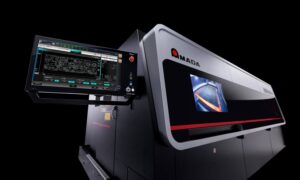
Fabrication can involve a range of materials, including metals, plastics, wood and composites. In sheet metal fabrication, the process commonly starts with a CAD-based design and uses machinery such as CNC punch presses, laser cutting machines and press brakes.
Typical fabrication operations include:
- CNC punching and laser cutting
- Press braking (bending)
- Welding and joining
- Insertion of fasteners or studs
- Surface finishing, for example powder coating
- Mechanical sub-assembly
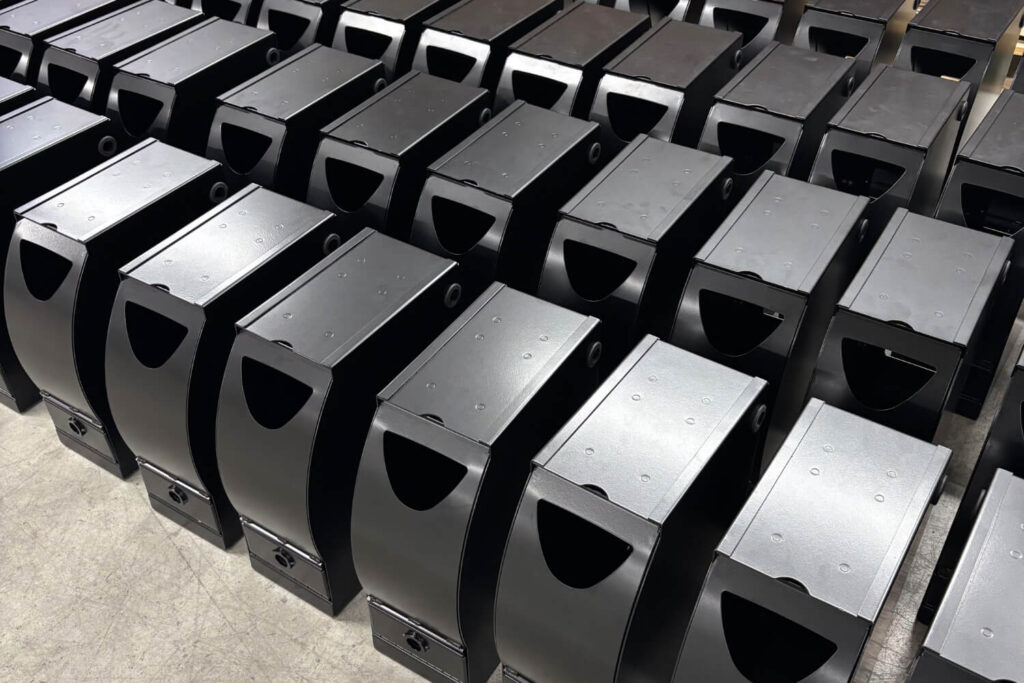
Fabrication can produce individual components, sub-assemblies or complete fabricated products, depending on the design and scope of the work. Examples include brackets, panels, frames, chassis, cabinets, enclosures and kiosks.
Fabrication does not always mean that a product is unfinished. Where a product consists primarily of fabricated components, it can be supplied as a complete finished fabricated item. The distinction between fabrication and manufacturing is therefore mainly about the scope of the production process, rather than whether an item is technically finished.
Fabrication definition: Fabrication is the process of constructing components, structures or assemblies from raw or semi-finished materials through processes such as cutting, forming, bending, welding and joining.
What is Manufacturing?
Manufacturing is the broader process of producing products from raw materials and components. It can include fabrication, but may also involve sourcing and managing materials, integrating different components, complete product assembly, testing, inspection, packaging and logistics.
Manufacturing brings together multiple production processes and disciplines to turn a design into a finished, usable product. Depending on the product, this may include sheet metal manufacturing services alongside electrical, plastic, mechanical or other components.
Typical manufacturing activities can include:
- Sourcing and managing materials
- Fabrication of components and sub-assemblies
- Integration of electrical, plastic or other non-metal parts
- Complete product assembly
- Testing, inspection and compliance
- Packaging and logistics
The exact scope of manufacturing varies between products. A manufacturer may produce individual components, assemble them into a complete product, or manage the full production process from design through to delivery.
Manufacturing definition: Manufacturing is the broader process of producing finished products from raw materials and components. It can involve fabrication, assembly, integration, testing, inspection, packaging and other production activities.
Key Differences: Sheet Metal Fabrication vs Manufacturing
While fabrication and manufacturing often work side by side, their roles are distinct. Fabrication focuses on producing parts, frames, brackets, enclosures and assemblies by cutting, forming and joining materials such as sheet metal or tube. Manufacturing takes this further by integrating those fabricated parts with plastics, electronics and other components to create a complete product.
The processes also differ. Fabrication involves precision cutting, forming, welding, coating and sometimes light mechanical assembly to prepare parts for the next stage. Manufacturing adds tasks such as integrating electrical systems, installing non-metal components, carrying out final assembly, testing and packaging.
The outputs reflect this distinction. Fabrication delivers components and sub-assemblies such as panels, chassis or cabinets. Manufacturing delivers a finished, ready-to-use item.
Fabrication and Manufacturing: A Practical Example
A retail self-service kiosk provides a useful example of how fabrication and manufacturing can work together. Fabrication covers CNC punching and laser cutting sheet metal panels into components. Press braking forms the required bends, followed by welding and grinding to create the frame or casing. A powder-coated finish is then applied. At this stage, light assembly may take place, such as fitting fabricated brackets, aligning mounting points or partially assembling the product to streamline later production steps.
Manufacturing then takes over, integrating the touchscreen display, wiring the electronics, fitting payment modules, running functional tests and packaging the completed kiosk for delivery.
The fabrication work creates the physical metal components and structures. Manufacturing encompasses the wider process of bringing those components and other parts together into a complete, tested product.
Fabrication Scale and Flexibility
Although fabrication has often been associated with custom one-off or small-batch work, modern facilities like Unifabs support volumes from single units to multi-thousand-part orders, often matching the scale of full sheet metal fabrication and manufacturing projects. This flexibility allows fabrication to support both rapid development cycles and sustained, high-volume supply.
Where Fabrication Fits into the Manufacturing Process
Fabrication is often one stage within a wider manufacturing process, although a fabricated product can also be supplied as a finished item in its own right.
The relationship can be summarised as:
Design → Fabrication → Assembly → Integration → Testing → Packaging → Delivery
Not every product requires every stage. A simple fabricated enclosure may only require cutting, bending, joining and finishing before it is ready for use. A more complex product may require fabrication alongside electrical integration, mechanical assembly, testing and packaging.
Good product design can make these stages easier to manage. Design for Manufacture considers how a product will be produced from the outset, helping designers account for materials, fabrication processes, assembly and other manufacturing requirements.
Why Sheet Metal Fabrication Still Matters
Fabrication remains vital to modern manufacturing, particularly in the UK where flexibility and precision are critical. It enables rapid prototyping, efficient design iteration, high levels of accuracy and quality control, reliable lead times, and strong visual and functional finishes.
Whether you are building a complete product or a single sub-assembly, in-house fabrication helps maintain consistency and control.
When to Use Fabrication in Manufacturing
Fabrication is well suited to a wide range of applications, including:
- Electrical enclosures
- Mounting brackets
- Cabinet frames and chassis
- Retail and industrial display units
- Welded box sections
- Fully finished metal products
Fabrication becomes even more valuable when it is delivered by the same supplier responsible for later assembly and integration. At Unifabs, this reduces delays, improves quality and simplifies communication and can even help lower production costs.
You can find real examples and sector insights on our Sectors We Serve page, and learn more about design and fabrication fundamentals in our Sheet Metal Fabrication FAQs and Design for Manufacture pages.
The Role of Fabrication in UK Manufacturing
In modern UK manufacturing, fabrication and manufacturing work hand in hand. Fabrication forms the structural and functional backbone of many products, particularly those made from sheet metal.
At Unifabs, our design-to-delivery service means we handle fabrication, assembly and product delivery under one roof. This allows us to support everything as your subcontract manufacturing partner from one-off prototypes to full production runs with precision, speed and consistency.
We hope that this article has given you some insight into the differences between fabrication and manufacturing. If you’re involved in production planning or selecting a supplier, understanding both is key. At Unifabs, we support projects from initial design through to final delivery, offering precision sheet metal fabrication alongside complete product assembly. Whether you need individual components, sub-assemblies, or fully finished products, our team can guide you on the best approach to bring your ideas to life efficiently and reliably. Explore our sheet metal manufacturing services and manufacturing capabilities to see how we can support your next project from start to finish.
Everything you need to know about Sheet Metal Fabrication
Here is an overview of questions that we are most commonly asked.
Want to learn more?
Fabrication refers to producing parts or assemblies, often from metal, by cutting, shaping and joining materials. At Unifabs, this includes sheet metal processes such as laser cutting, bending, welding and coating.
Fabrication is the process of building parts or products from raw materials through forming, joining and finishing. In industrial settings, it usually refers to metal fabrication using CNC equipment and manual or robotic welding.
No. Fabrication is a subset of manufacturing. It involves creating the parts or sub-assemblies that go into a finished product. Manufacturing includes fabrication along with assembly, testing and logistics.
Yes. Fabrication can be considered part of the wider manufacturing process. It focuses on creating components or assemblies through processes such as cutting, forming, bending and joining, while manufacturing can encompass fabrication alongside assembly, testing, inspection, packaging and other production activities.
Machining removes material from a workpiece to create a required shape, typically using processes such as milling, turning or drilling. Fabrication generally involves processes such as cutting, forming, bending and joining materials to create components or assemblies. Some manufactured products use both machining and fabrication, depending on their design and material requirements.
Fabrication focuses on creating components, structures or sub-assemblies through processes such as cutting, forming, bending and joining. Manufacturing is broader and can include fabrication alongside assembly, integration, testing, inspection, packaging and other production activities.