
Robotic arc welding services
Our robotic arc welding capability supports ongoing subcontract manufacturing programmes where consistent quality, repeatability and production efficiency are critical. By combining advanced robotic welding technology with skilled operator expertise, we help OEM customers achieve reliable, high-quality welded components across repeat production runs.
What is robotic welding?
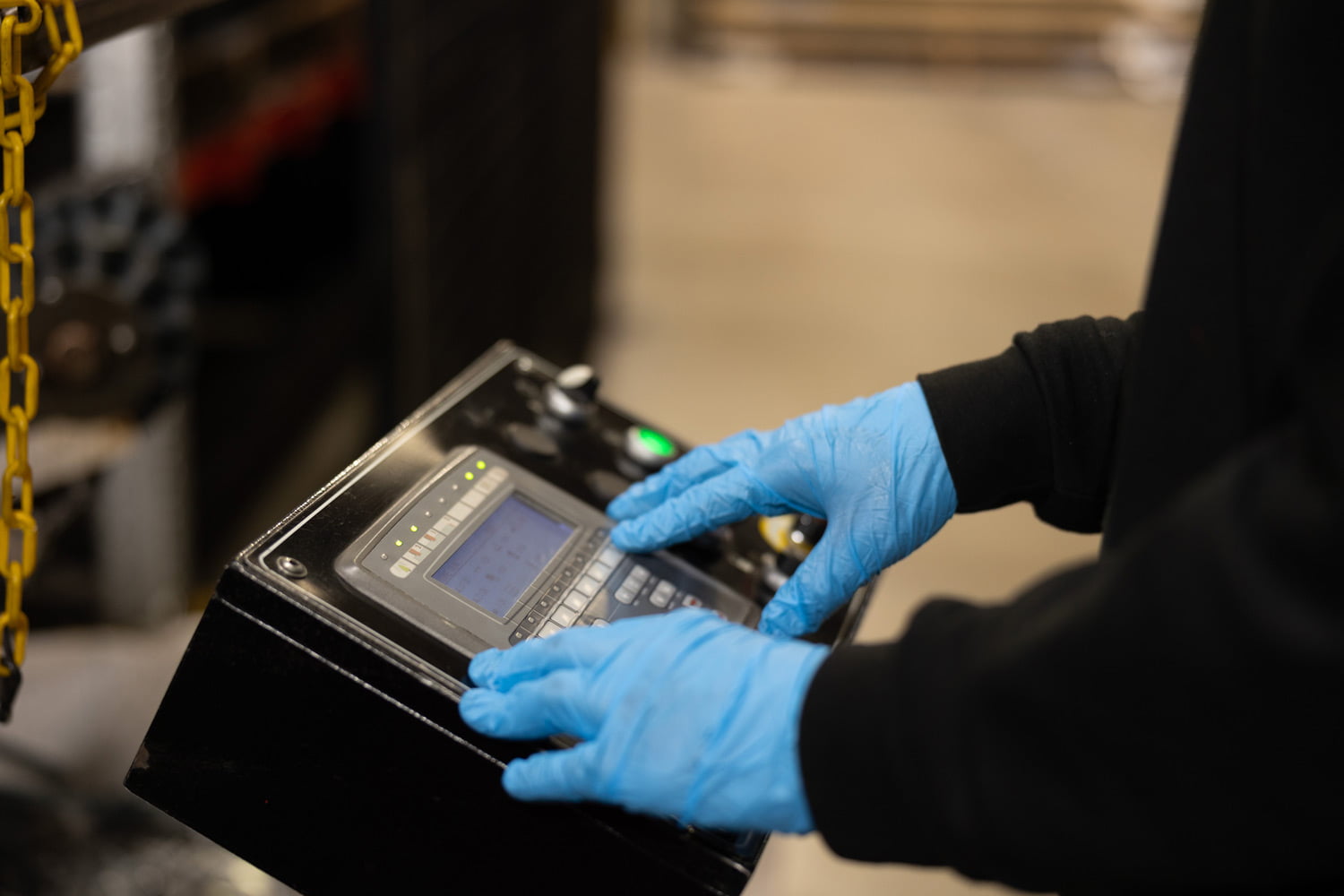
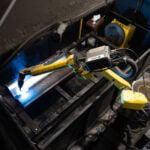
Robotic welding is an automated welding process where industrial robots perform programmed welds with a high degree of accuracy and repeatability. The robot carries out the welding operation based on pre-programmed instructions, while skilled operators remain responsible for programming, setup, quality control and managing the production process.
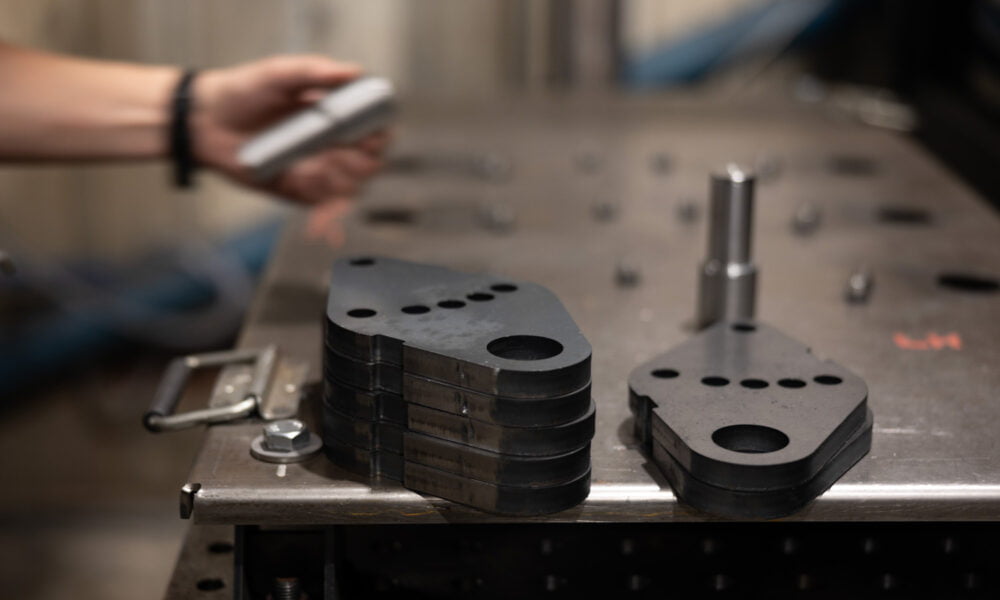
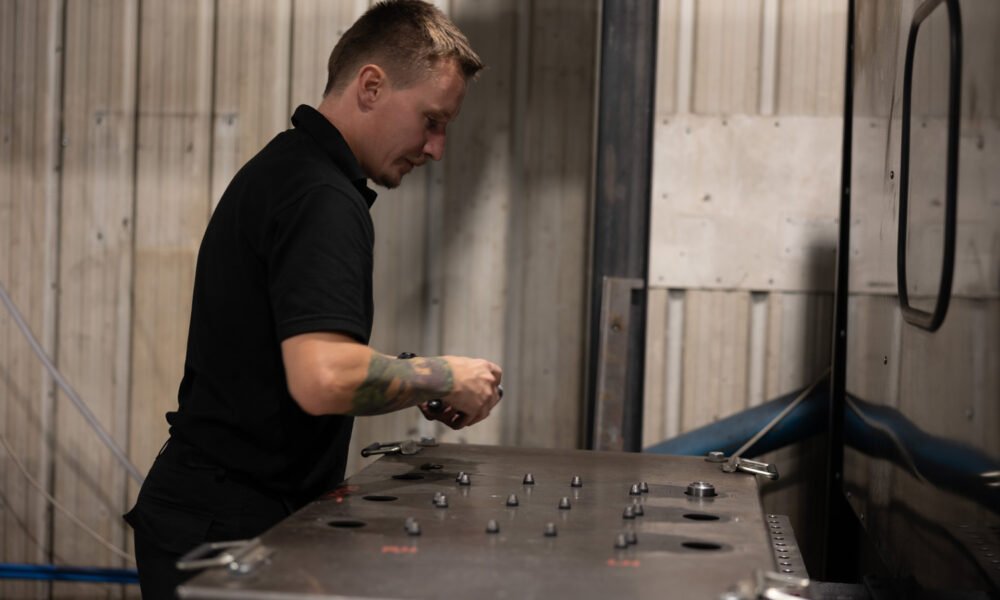
Robotic welding systems can be adapted to suit a range of applications, using specialist tooling, fixtures and jigs to position components accurately during manufacture. This enables manufacturers to produce consistent, high-quality welds across successive production runs, including complex assemblies and components that may be difficult to access manually.
When is robotic welding the right solution?
Robotic welding is particularly effective for manufacturers producing repeat components where consistent quality, accuracy and production efficiency are important. It is well suited to ongoing production programmes where components have a proven design and can be accurately positioned using dedicated fixtures and tooling.
For higher-volume sheet metal assemblies, robotic welding can help improve repeatability, reduce variation and maintain consistent weld quality throughout production. However, the suitability of automation depends on factors such as product design, production volumes and the level of repeatability required.
At Unifabs, our engineering team can work with customers to identify opportunities where robotic welding can add value through our Design for Manufacture approach or Value Engineering services.
Advantages of robotic welding
Consistent weld quality
One of the key advantages of robotic welding is the ability to achieve consistent, repeatable weld quality across production runs. Once programmed and proven, robotic systems can perform the same weld sequence accurately time after time, reducing variation between components.
Improved production efficiency
Robotic welding can help improve manufacturing efficiency by maintaining consistent cycle times and supporting continuous production. At Unifabs, our twin-cell robotic welding setup allows operators to prepare the next component while the robot is welding, helping maximise throughput.
Increased repeatability
By controlling weld parameters, movement and positioning, robotic welding helps maintain consistent results across manufactured components. This repeatability is particularly valuable for customers producing established product ranges where consistency is critical.
Improved operator safety
Automation can also help reduce exposure to some of the hazards associated with manual welding, including heat, fumes and sparks. By taking on repetitive welding tasks, robotic systems support a safer and more controlled working environment for our operators.
If you are considering whether automation is the right approach for your production requirements, our guide explains the differences between manual and robotic welding, including where each process is best suited.
Materials
- Mild Steel
- Aluminium
Capabilities
Max fabrication size
3000 x 1500 mm
Max fabrication weight
1000 kg
(for manipulators)
Technology
- Six-axis Fanuc ARC Mate 110iC (twin cell)
- Six-axis Fanuc AM100id (single cell)
Our Robotic Welding Capabilities
At Unifabs, our robotic welding capability combines advanced automation with skilled operator expertise to deliver consistent, repeatable MIG and TIG welds for ongoing sheet metal production programmes.
Our Fanuc robotic welding systems support complex welded assemblies where accuracy, consistency and production efficiency are critical. This capability forms part of our wider fabrication and subcontract manufacturing service.
Robotic Welding Technology
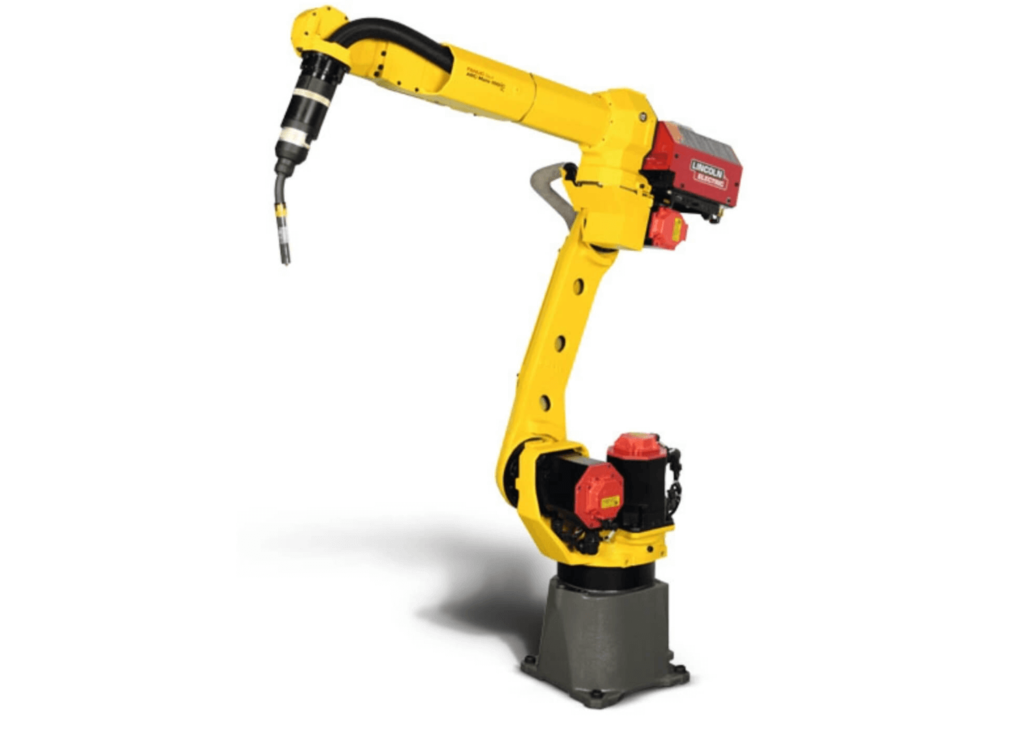
Six-axis Fanuc ARC Mate 110iC (twin cell)
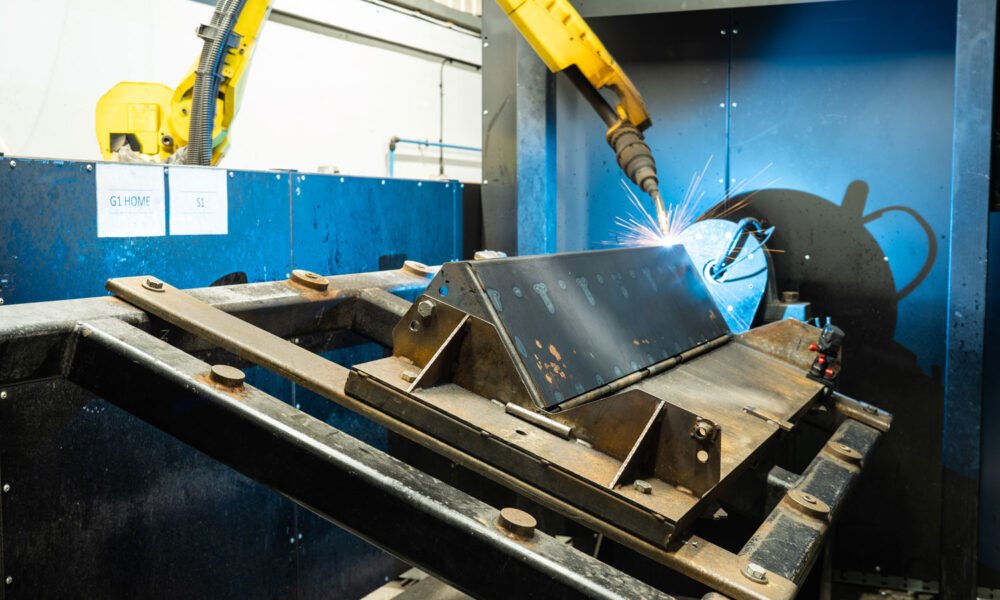
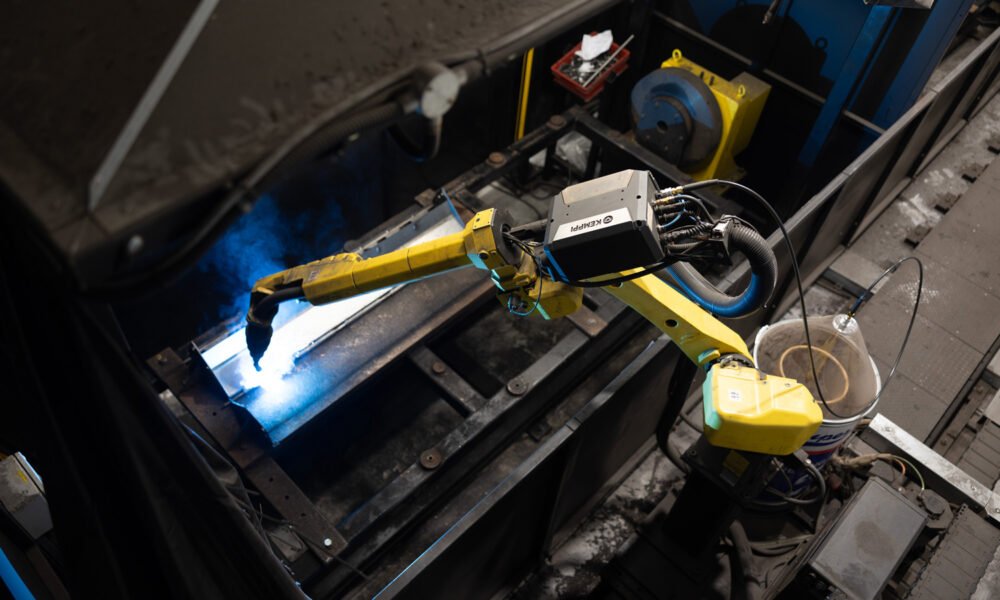
The Fanuc ARC Mate 110iC robotic welding system combines a high rigidity arm and advanced servo technology to improve movement speed, reduce cycle times, and deliver consistent weld repeatability. Mounted on a 9 m track servicing two 3 m single axis manipulator stations, the ARC Mate 110iC can weld in one cell while the operator prepares the next component in the other.
Six-axis Fanuc AM100id (single cell)
The Fanuc AM100id robotic welding system can handle a wide variety of welding applications. Its slim curved design, integrated features and larger workspace provide flexibility for complex components and assemblies. Combined with a Kemppi 350A A7 MIG welder and Binzel torch system, the system delivers consistent, precise welding results.

Visit the Knowledge Base
Uncover more about sheet metal manufacturing processes, delve into our industry insights, and find answers to your frequently asked questions in the knowledge base.