Introduction: The hidden cost of design mistakes
When a powder-coated part does not fit, finishes peel, or assembly takes longer than planned, many engineers assume the problem lies with the coating line or assembly team. In reality, most issues start in the design phase.
Small oversights in panel alignment, tolerances, material selection, or assembly accessibility can quickly lead to misaligned parts, costly rework and production delays. These problems do not just affect appearance: they can compromise product performance, durability and safety.
In this article, we explore the most common powder coating and assembly problems caused by design, explain how to prevent them before production, and highlight strategies that save time, reduce costs and improve product quality.
Why powder-coated parts fail and how to avoid assembly issues
Even experienced design teams can underestimate how early design decisions impact finishing. The most common problems we see include:
Misaligned panels after coating
Cause: Ignoring coating thickness or tolerance stack-up
Impact: Parts do not fit correctly, requiring grinding or rework
Powder coatings and other finishes add material to a part. If designers do not allow for this build‑up, components may not fit together as intended. Accounting for coating thickness at the design stage helps avoid misalignment, assembly issues and costly rework.
Inaccessible surfaces for cleaning and coating
Cause: Complex corners, deep recesses or tight welds
Impact: Poor pre-treatment, uneven coating and reduced adhesion
Tight corners, deep recesses or complex welds can trap contaminants and hinder cleaning or pre‑treatment. Accessible surfaces and smooth transitions make preparation more effective, improving coating performance and consistency.
Incorrect finish for the environment
Cause: Choosing coatings that do not suit exposure conditions (UV, moisture, corrosion)
Impact: Premature wear, fading or functional failure
Outdoor products require coatings that resist UV exposure, moisture and corrosion, while indoor items may prioritise appearance and scratch resistance. Choosing the wrong finish can reduce product lifespan and impact maintenance.
Unsuitable material selection
Cause: Choosing materials that require specialist coating processes or are unsuitable for the intended finish
Impact: Increased coating costs, adhesion problems or reduced finish quality
Some materials require additional preparation or specialist powder systems to achieve a high-quality finish. For example, pre-galvanised steel can require anti-gassing powder coatings to minimise pinholing or bubbling caused by gases released from the zinc layer during curing. Considering the coating process during material selection can help reduce costs while achieving a more consistent finish.
Assembly damage during installation
Cause: Poorly planned access points or tight tolerances
Impact: Scratches, scuffs or improvised fixes that reduce quality
Parts that are difficult to reach increase the risk of scratches, scuffs or improvised workarounds during assembly. Planning access points and assembly sequences early reduces these risks and helps maintain high‑quality finishes.
Functional features compromised by coating
Cause: Not masking holes, threads or critical surfaces
Impact: Assembly problems, misaligned screws or non-functional parts
Masking critical features during powder coating ensures proper assembly and functionality.
Understanding these common mistakes highlights why the following design principles are so important, as each principle directly addresses challenges we so often see in real projects.
How to design for powder coating success and prevent assembly problems
The following principles reflect common powder coating design considerations and assembly requirements that should be addressed early in the development process. Designing with finishing in mind ensures products are easier to manufacture, more durable and reliable, and are cost-effective to produce from the start.
Some key principles to consider at the design phase are:
Include drainage and vent holes
Without proper drainage, liquids and powders can pool in corners during pre‑treatment, powder coating or curing, which can cause uneven coverage or corrosion. Strategically placed holes allow liquids to escape and ensure consistent coating coverage.
For example, small holes in corners or low points allow liquids to drain efficiently while avoiding visible surfaces, helping maintain aesthetics. Planning drainage early avoids costly rework or touch‑ups.
Treat edges carefully
Sharp corners and tight radii create stress points that can cause coating cracks, peeling or chipping. Rounding edges reduces stress on the coating, improves durability and can enhance user safety.
Practical tip: radii of 1–3 mm on corners are often sufficient to reduce coating stress while maintaining design intent.
Design for powder access
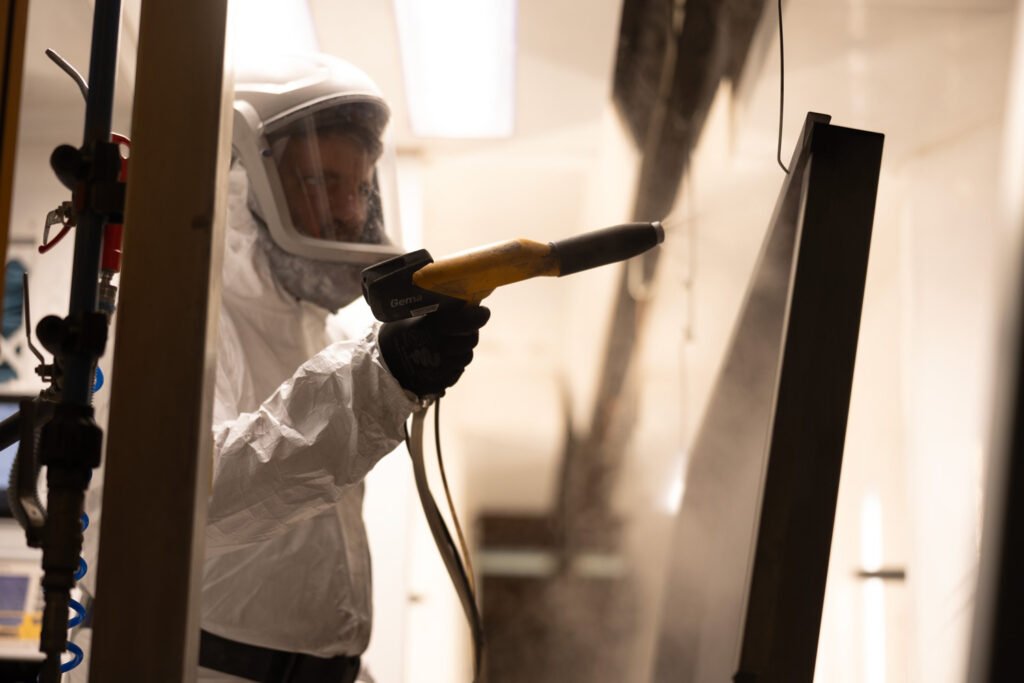
Deep recesses and narrow openings can make powder coating difficult because the electrostatically charged powder naturally deposits on the nearest surfaces first. This can reduce coverage on internal faces or create inconsistent coating thickness.
Where the design allows, incorporating access or relief holes on the rear face of a deep area can improve powder wrap-around and help achieve a more even coating throughout the component.
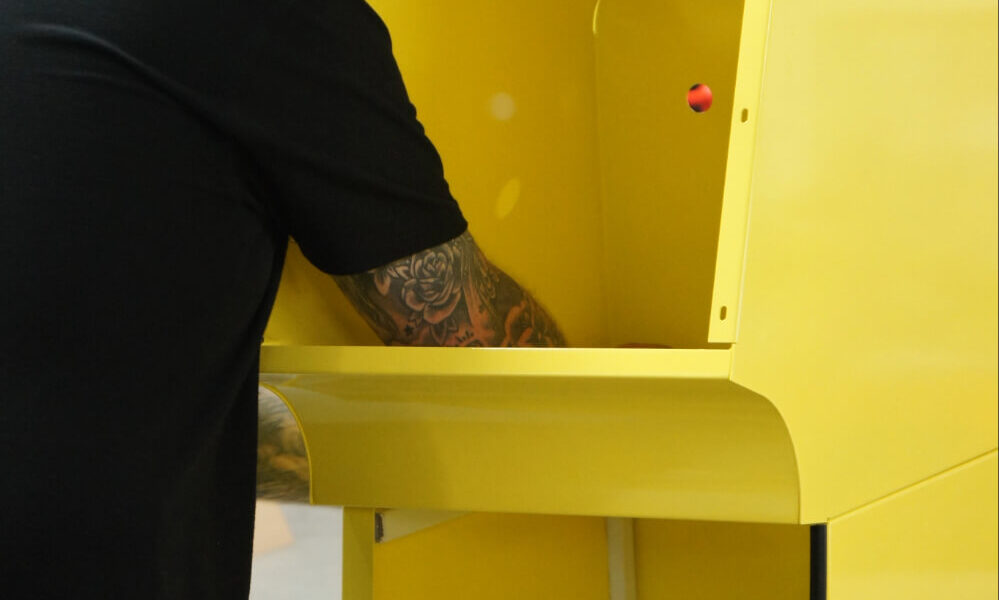
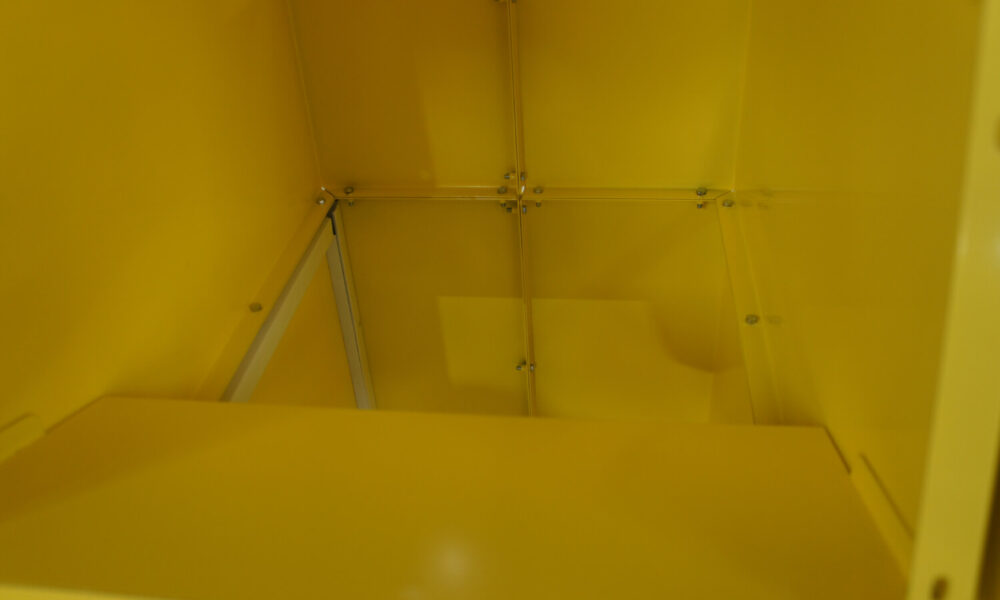
A similar challenge was identified when manufacturing the CauliBox collection kiosks for Cauli Ltd. During the design review process, our engineering team identified that coating the kiosk in its original configuration would only achieve patchy internal coverage.
Working collaboratively with Cauli’s engineering team, design changes were introduced to allow the kiosk sections to be powder coated individually before final assembly. This improved access during finishing, ensuring more consistent coating coverage while also making manufacture and assembly more efficient.
Considering powder coating requirements earlier in the design process helped create a product that was easier to manufacture while maintaining the required quality of finish.
Make assembly‑friendly designs
Parts that are difficult to handle or assemble increase the likelihood of finish damage. Designing accessible components, with clear sequences and tolerances, allows assembly to proceed efficiently.
Design insight: consider the order of assembly and access points for screws, clips or panels. Early planning reduces handling errors and prevents scratches or scuffs.
Account for coating build‑up in tolerances
Powder coatings and other finishes add a small but important thickness to surfaces, typically 60–80 microns per face. When two coated parts come together, this build‑up is effectively doubled and can impact fit.
Designers should allow for this thickness in clearances and tolerances, particularly for mating parts, threads and tight assemblies. Doing so ensures components fit correctly, avoiding misalignment, assembly issues and rework.
Align material choice with finishing requirements
Different metals and alloys interact differently with coatings. Aluminium typically requires specific pre-treatment processes, while mild steel relies on effective corrosion protection. Some pre-finished materials, such as pre-galvanised steel, may require specialist anti-gassing powders to achieve reliable adhesion, increasing finishing costs. Considering the intended finishing process during material selection can help avoid unnecessary coating costs later in production.
Over-specifying materials can increase cost without improving the finish, while under-specifying may lead to poor surface quality, adhesion issues or reduced durability. Variations in material grade or condition can also affect how coatings appear once applied.
Prototyping insight: creating prototypes early can highlight potential finishing issues, such as fit, surface preparation or assembly challenges, before full production begins, ensuring reliable performance and appearance.
Design for hanging and handling during finishing
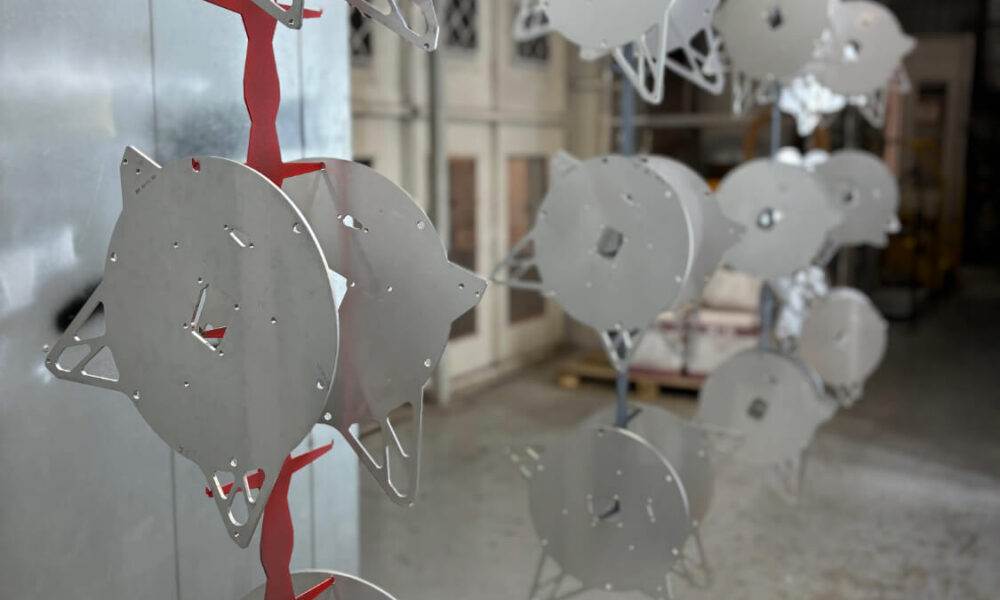
Parts need secure support throughout pre‑treatment and powder coating, which is often overlooked at the design stage. Without considering how a part will be hung or handled, it can be difficult to achieve consistent coverage or maintain finish quality.
Components may be suspended using hooks, racks, fixtures or magnetic supports. Each approach requires contact points that do not interfere with critical surfaces or visible areas. Designing with this in mind prevents marking or uncoated areas, ensures even coating and allows efficient processing. Considering balance and orientation also ensures parts hang correctly, avoiding movement or uneven build‑up.
Protect functional features with masking
Certain features of a part must remain free of coating so that fixings fit correctly and functional interfaces are maintained. Powder coating can otherwise fill holes or features, interfering with assembly or operation.
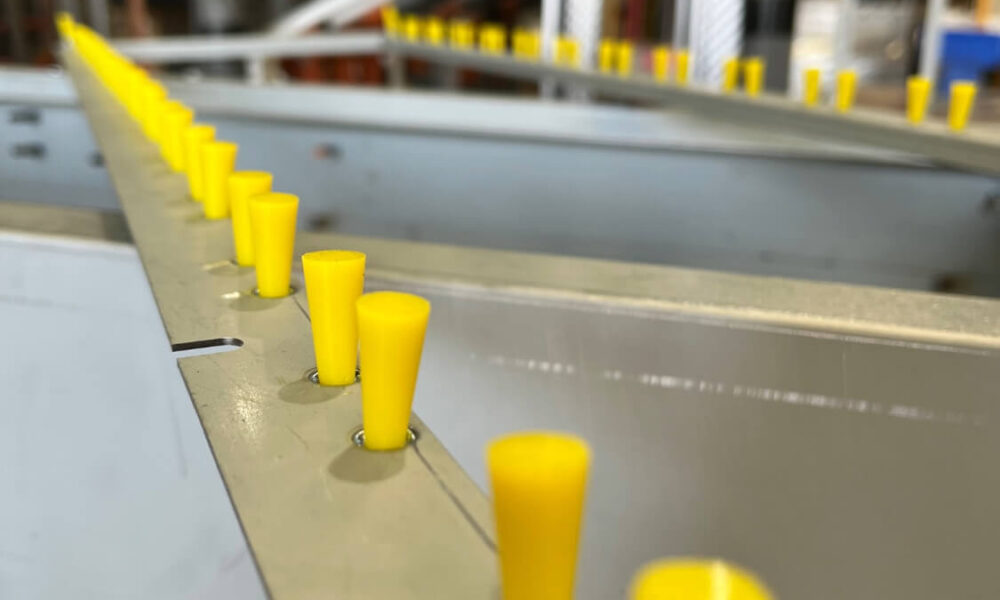
High‑temperature masking tapes and heat‑rated plugs are used to shield these critical areas during the powder‑coating process. These materials can tolerate the curing cycle while preventing powder from adhering inside holes or along mating surfaces. After curing, the masking is removed to reveal clean, uncoated surfaces that maintain the intended fit and function.
Considering masking requirements during design, such as specifying which features must be kept clear of coating and how they will be protected, helps avoid assembly issues, costly rework and functional failures.
Working with one provider for design, fabrication and finishing gives engineers a distinct benefit. Early design decisions can take into account the manufacturer’s processes, materials and finishing methods, reducing rework, improving efficiency and ensuring the final product meets functional and aesthetic requirements.
Applying these principles from the outset helps ensure products are durable, reliable, cost‑effective and visually appealing, setting the stage for successful finishing and assembly.
Real‑World Example: Solving Powder Coating and Assembly Challenges
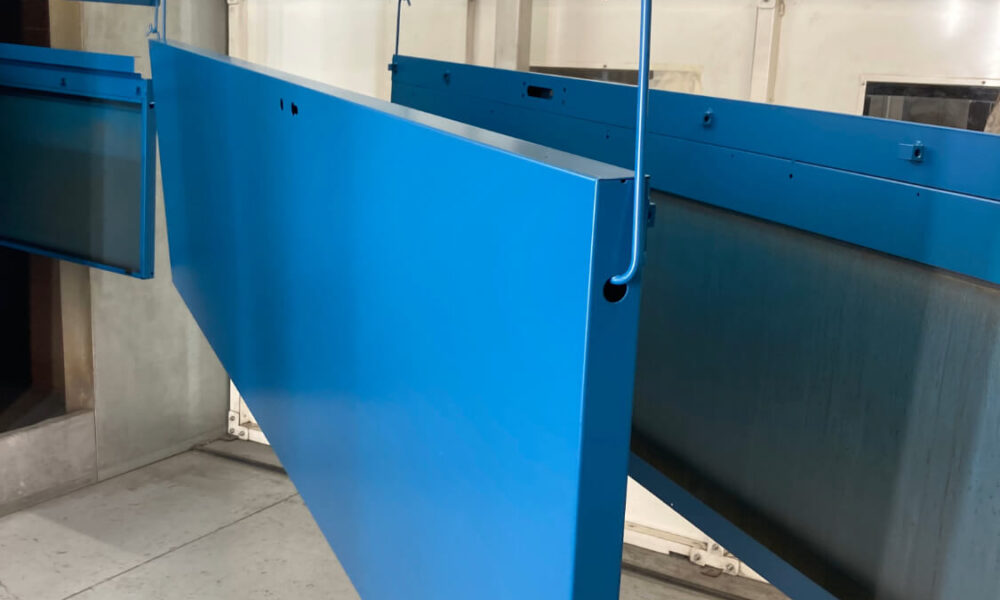
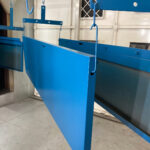
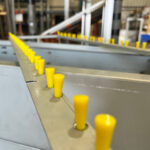
A customer approached us looking to reduce cost and improve the finish of a large frame fabrication without compromising strength. The original design relied on spot welding prior to powder coating, meaning complete assemblies had to be coated as a single unit.
While structurally effective, this created several challenges. Large frames take up significant space on the powder‑coating line, reducing throughput and increasing processing time and cost. In addition, spot welding can leave visible marks depending on material thickness.
By reviewing the design, we identified an opportunity to rethink how the components were joined. Working with Press‑Form Machinery Ltd, we developed a crimping solution using bespoke tooling for our Haeger presses. This allowed individual sections to be powder coated before final assembly rather than afterwards.
The result was a much more efficient process. Coating smaller sections increased throughput, made better use of available space and improved consistency of the final finish. Assembling components after coating also eliminated visible weld marks, enhancing overall appearance while reducing manufacturing cost.
This example demonstrates how considering finishing earlier in the design and process planning stage can unlock more efficient production methods, improve product quality and deliver measurable cost savings.
Usually due to ignoring coating thickness or stacking tolerances during design. Accounting for coating build-up in your tolerances ensures parts fit correctly after finishing.
Plan access points, assembly sequences, and design assembly-friendly parts. This reduces handling errors, scratches, and improvised fixes during installation.
Yes. Prototyping identifies potential fit, coating, and assembly issues early, preventing costly rework and delays in full-scale production.
Prototypes allow testing of surface preparation, assembly accessibility, masking needs, and finish adhesion before committing to production. Early prototyping ensures reliable quality and highlights potential cost-saving improvements.
Conclusion
Finishing is not just a cosmetic step: it is critical to the performance, longevity and perception of a product. By understanding common mistakes and proactively designing with finishing in mind, engineers and designers can create products that are durable, functional and visually appealing.
At Unifabs, we work closely with clients from concept to completion, ensuring finishing is an integral part of every design, not an afterthought. Contact our team today to see how our design-for-finishing approach can save time, reduce costs and ensure flawless powder coating and assembly on your next project.